Tag: Rare Earths

  • China Dominates The Supply Of US Critical Minerals List

    China Dominates The Supply Of US Critical Minerals List

    Most countries have, for many decades, kept a record of their own critical minerals list.

    For example, the U.S., drew up a list of “war minerals” during World War I, containing important minerals which could not be found and produced in abundance domestically. They included: tin, nickel, platinum, nitrates and potash.

    Since then, as the economy has grown and innovated, critical mineral lists have expanded considerably. The Energy Act of 2020 defines a critical mineral as:

    “A non-fuel mineral or mineral material essential to the economic or national security of the U.S., whose supply chains are vulnerable to disruption.”

    – ENERGY ACT, 2020.

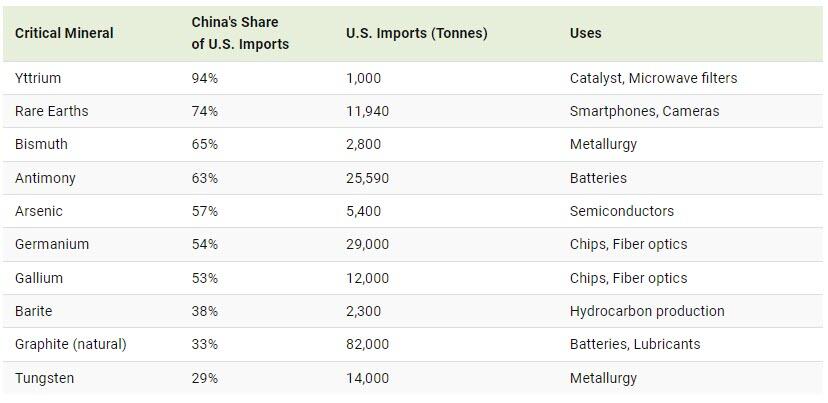
    Currently there are 50 entries on this list and the U.S. Geological Survey (USGS) estimates that China is the leading producer for 30 of them. From USGS data, Visual Capitalist’s Marcus Lu visualizes China’s share of U.S. imports for 10 critical minerals.

    What Key Critical Minerals Does the U.S. Import From China?

    The U.S. is 100% import-reliant for its supply of yttrium, with China responsible for 94% of U.S. imports of the metal from 2018 to 2021.

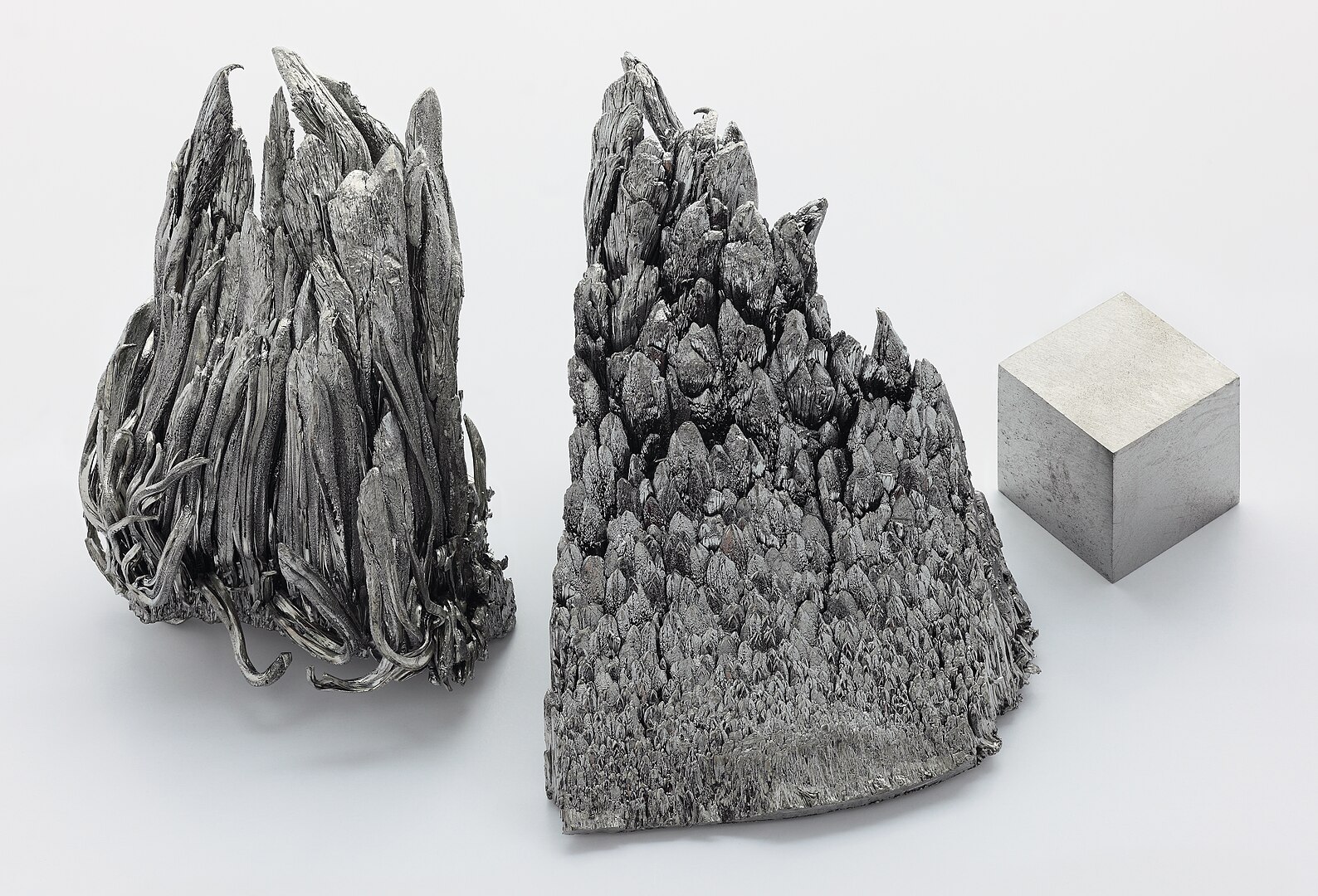
    A soft silvery metal, yttrium is used as an additive for alloys, making microwave filters for radars, and as a catalyst in ethylene polymerization—a key process in making certain kinds of plastic.

    China is a major supplier of the following listed critical minerals to the U.S.

    Note: China’s share of U.S. critical minerals imports is based on average imports from 2018 to 2021.

    Meanwhile, the U.S. also imports nearly three-quarters of its rare earth compounds and metals demand from China. Rare earth elements—so called since they are not found in easily-mined, concentrated clusters—are a collection of 15 elements on the periodic table, known as the lanthanide series.

    ℹ️ Yttrium and scandium exhibit similar rare-earth properties, and are found in the same ore bodies. They are often grouped together with the lanthanide series.

    Rare earths are used in smartphones, cameras, hard disks, and LEDs but also, crucially, in the clean energy and defense industries.

    Does China’s Dominance of U.S. Critical Minerals Supply Matter?

    The USGS estimates that China could potentially disrupt the global rare earth oxide supply by cutting off 40–50% production, impacting suppliers of advanced components used in U.S. defense systems.

    A version of this sort of trade warfare is already playing out. Earlier this year, China implemented export controls on germanium and gallium. The U.S. relies on China for around 54% of its demand for both minerals, used for producing chips, solar panels, and fiber optics.

    China’s controls were seen as a retaliation against the U.S. which has restricted the supply of chips, chip design software, and lithography machines to Chinese companies.

    Source: Zero Hedge

    Critical Minerals Photo credit Wikipedia: Yttriumsublimeddendritic, high purity 99.99 % Y/TREM. As well as an argon arc remelted 1 cm3 yttrium cube for comparison. Purity 99.9 %.

  • The Fascinating World of Rare Earths: 8 Abundant but Elusive Elements

    The Fascinating World of Rare Earths: 8 Abundant but Elusive Elements

    Rare earth elements have always lived up to their name – rare. However, within this classification, there are eight rare earths that are relatively abundant in the Earth’s crust, making them more accessible for mining than some of their counterparts. In this blog post, we’ll explore these fascinating elements, their properties, and why they are considered rare despite their abundance.

    Rare Earths

    Cerium (Ce)

    Cerium is the most abundant rare earth element, and it is more common in the Earth’s crust than copper or lead. Despite this abundance, cerium is still considered “rare” due to its dispersion and difficulty in extracting it in concentrated forms. It is essential for a variety of applications, from catalysts in automotive exhaust systems to glass polishing.

    Lanthanum (La)

    Lanthanum is the second most abundant rare earth element and is often found alongside cerium. It has various industrial applications, including in the production of rechargeable batteries, camera lenses, and even in petroleum refining. Lanthanum is abundant but challenging to extract in high concentrations.

    Neodymium (Nd)

    Neodymium is widely known for its use in powerful magnets, such as those found in headphones and electric vehicle motors. While it is more accessible than some other rare earths, mining and processing neodymium still pose significant challenges due to its low natural concentrations.

    Praseodymium (Pr)

    Praseodymium is another abundant rare earth element, frequently found alongside neodymium. It is crucial for high-strength alloys and magnetic materials, yet it remains “rare” due to the challenges associated with extracting and refining it.

    Samarium (Sm)

    Samarium is used in specialized magnets, nuclear reactors, and even in the treatment of certain cancers. While not as rare as some of its counterparts, samarium still requires careful extraction and refining processes.

    Europium (Eu)

    Europium is essential in the manufacturing of color television screens and energy-efficient lighting. Despite being more abundant than some other rare earths, its specialized applications make it relatively rare in minable concentrations.

    Gadolinium (Gd)

    Gadolinium is a critical component in the development of magnetic resonance imaging (MRI) contrast agents. It is relatively abundant, but its importance in the medical field keeps it in demand, making it valuable.

    Terbium (Tb)

    Terbium is used in the production of color phosphors for televisions and computer screens, as well as in certain types of energy-efficient lighting. Although more abundant than some rare earths, it remains challenging to mine and refine.

    Why Are These Elements Rare?

    The rarity of these abundant rare earth elements lies in their distribution and the difficulty in extracting them in concentrated forms. Unlike more common elements like iron or aluminum, rare earths are dispersed throughout the Earth’s crust and are often found mixed with other minerals, making extraction complex and costly.

    Furthermore, the environmental impact of rare earth mining and processing has led to stricter regulations, making it essential for mining companies to employ sustainable and responsible practices.

    Conclusion

    While these eight rare earth elements may be relatively abundant in the Earth’s crust compared to their scarcer counterparts, their rarity lies in the challenges associated with mining, refining, and processing them. The demand for these elements continues to grow in various industries, from electronics to healthcare, highlighting the importance of responsible mining practices and the need for ongoing research into alternative sources and recycling methods. As we look to the future, understanding and managing these rare resources will be crucial for sustaining our modern way of life.

    Stones Image by Sara from Pixabay